Empowering Adolescent Girls to Reduce Their Vulnerability to Human Trafficking
““The Willow team is incredibly grateful for our partnership with ChildVoice. They do incredible work restoring the lives of women and girls who have been victimized by human trafficking, and their approach is rooted in empowerment and building self-esteem and self-efficacy.” ”

Human trafficking is a global scourge that disproportionately inflicts untold suffering on marginalized women and girls across the globe. Of the 27.6 million people in forced labor at any given point in time, 61 percent are women and girls trafficked specifically for sexual exploitation. Trafficking of both girls and boys has sharply increased since 2019, especially in sub-Saharah Africa, but in other regions as well, such as Eastern Europe.
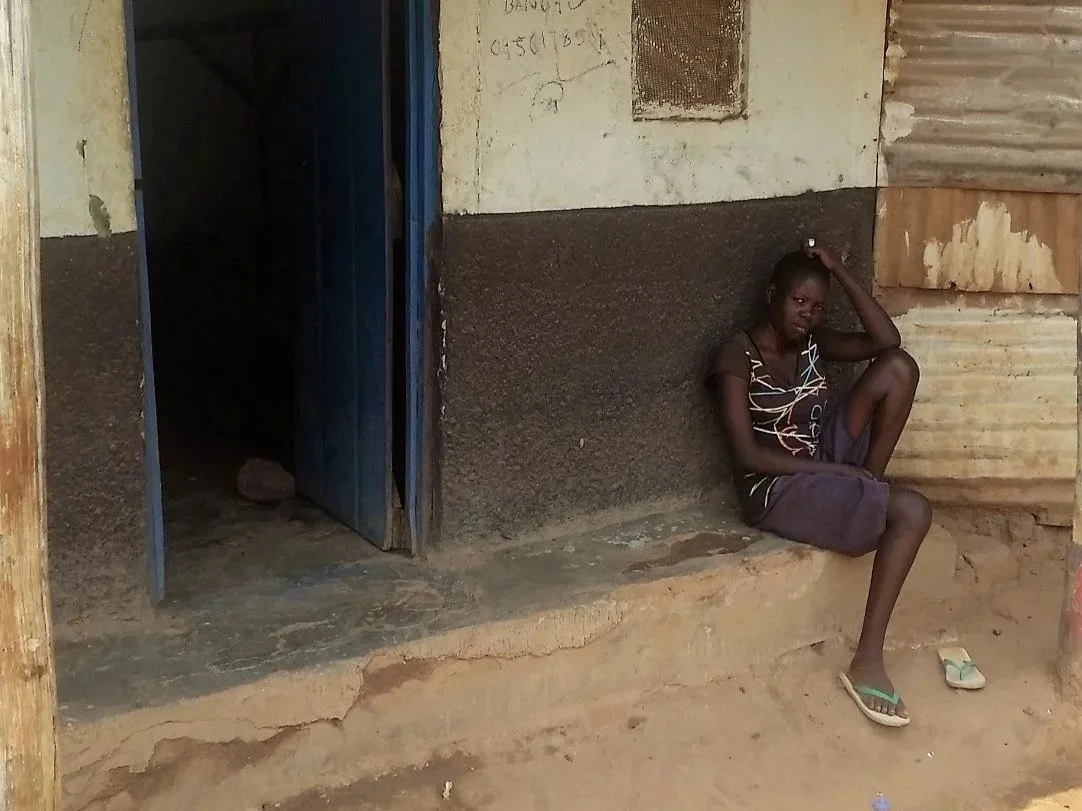
Displacement, sexual slavery, economic exploitation (such as domestic slavery), and other traumatic events have left thousands of adolescent girls in countries like Uganda, South Sudan, and Nigeria adrift in the aftermath of war and violence. The United Nations reports that 676 million women and children now within 50 kilometers (31 miles) of a conflict zone, and that conflict-related sexual violence increased by 87 percent from 2023 through 2024.

At the same time, adolescent girls in developing countries face daunting barriers to education. UNESCO reports that in sub-Saharan Africa, the number of out-of-school children continued to grow in recent years to 98 million (20 million in Nigeria alone), representing nearly half of all out-of-school children worldwide. For girls who do attend school, such issues as lack of access to menstrual hygiene products make school attendance especially difficult.
Empowering these girls so that they can not only avoid exploitation, but lead healthy and productive lives, promises to be one of the keys to ending the cycle of generational poverty that leaves hundreds of thousands vulnerable to human trafficking every year.
ChildVoice intersects with international efforts to combat human trafficking by empowering vulnerable and marginalized adolescent girls through psychosocial counseling, life skills training, health and hygiene education, vocational education, and other related services. We are also educating girls on how to avoid sexual exploitation. And we work diligently to raise awareness and understanding of the costs of human trafficking within their communities by engaging community stakeholders on human trafficking issues.

War-affected adolescent girls living in refugee camps often do not have access to basic hygiene items—especially menstrual products. Not having these necessities actually can prevent a girl from attending school, which puts her at risk for ending up on the streets and falling prey to human traffickers. It’s a vicious cycle we hope to break with our innovative THRIVE Project. Through our THRIVE programming, we provide reusable menstrual pad kits, teach girls in refugee settlements how to sew and use these kits, and educate them about women's health and emotional wellness. By teaching these young girls how to care for themselves physically and emotionally, as well as giving them something as simple as reusable sanitary pads, they are empowered to attend school regularly, reducing their vulnerability to manipulation and sexual violence.
Taken as a whole, our programs help adolescent girls reduce their risk of falling victim to human trafficking, while opening pathways to a brighter future for themselves and their children.
Special Report for Human Trafficking Awareness Month
“It is by standing up for the rights of girls and women that we truly measure up as men.”